
Find Texas Birth Records
Texas birth records are maintained by the Texas Department of State Health Services Vital Statistics Section and by county clerks across all 254 counties. This page covers how to search for birth records in Texas, how to request a certified copy of a birth certificate, and what you need to bring or send. You can order birth records online through Texas.gov, by mail, or in person at a county clerk office or at the DSHS office in Austin. The state has kept statewide records since 1903, and qualified family members can get certified copies at any time.
Texas Birth Records Overview
Where to Find Texas Birth Records
The Texas Department of State Health Services Vital Statistics Section is the primary office for birth records in the state. The VSS holds certified copies of birth certificates dating back to 1903 when statewide registration began. Walk-in service is available at 1100 West 49th Street in Austin, Monday through Friday, 8 AM to 5 PM. Walk-in requests are handled the same day in most cases. For mail orders, send your application to P.O. Box 12040, Austin, TX 78711-2040. You can also call 888-963-7111 to ask questions or check the status of a pending order.
The Texas.gov vital records portal lets you request birth certificates online from anywhere with internet access. Online orders go through the DSHS and follow the same rules as mail applications. You still need valid identification and must state your relationship to the person on the record. Online orders take 20 to 25 business days from the time the DSHS receives and processes the request. The portal accepts credit or debit cards, which is not an option for standard mail-in orders.
County clerks across Texas also serve as local registrars for vital records. Each county clerk's office files and maintains birth certificates for events occurring within that county. You can often request a certified birth certificate directly from the clerk in the county where the birth took place. County clerks charge the same $22 state fee and follow the same ID and application rules. Going to a county clerk can be quicker than mailing to Austin, since you can visit in person and sometimes walk out with a copy the same day.
The Texas Health and Safety Code Chapter 192 sets out how births must be registered in Texas. Under that chapter, the attending physician, midwife, or hospital must file a birth certificate no later than five days after the birth. The county keeps a local copy and the state keeps a separate copy. So two sources exist for the same record if you need to check both.
The Texas DSHS Vital Statistics Section provides details on ordering, processing times, and local vital records offices on its website. Click below to see a screenshot of the main DSHS portal.
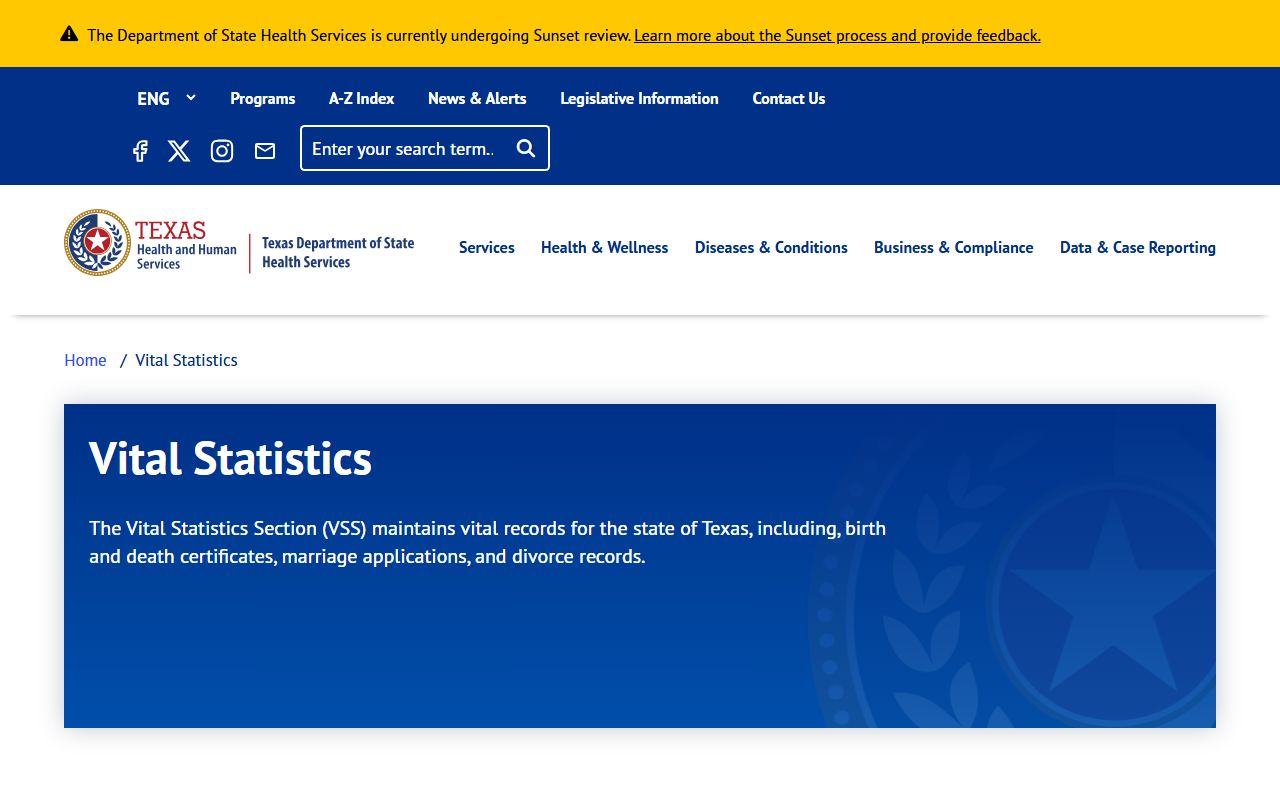
The DSHS site lists all county vital records offices alphabetically and gives phone numbers, hours, and mailing addresses for each one.
How to Request Texas Birth Records
To get a certified birth certificate by mail, download and fill out Form VS-140, the Mail Application for Birth Record, from the DSHS website. The form requires the full name of the person named on the record, their date of birth, the city or county where the birth took place, and the full names of both parents as they appear on the original certificate. The form must be completed in full. Photocopies, altered forms, or documents with strike-throughs or write-overs will not be accepted. Attach a photocopy of your valid photo ID and a check or money order for $22 made out to DSHS. Everyone signing Section 6 must sign before a notary public. Mail the completed package to DSHS-VSS, P.O. Box 12040, Austin, TX 78711-2040.
The Texas.gov portal handles online orders and processes them through the DSHS. Here is a look at the Texas.gov vital records page.
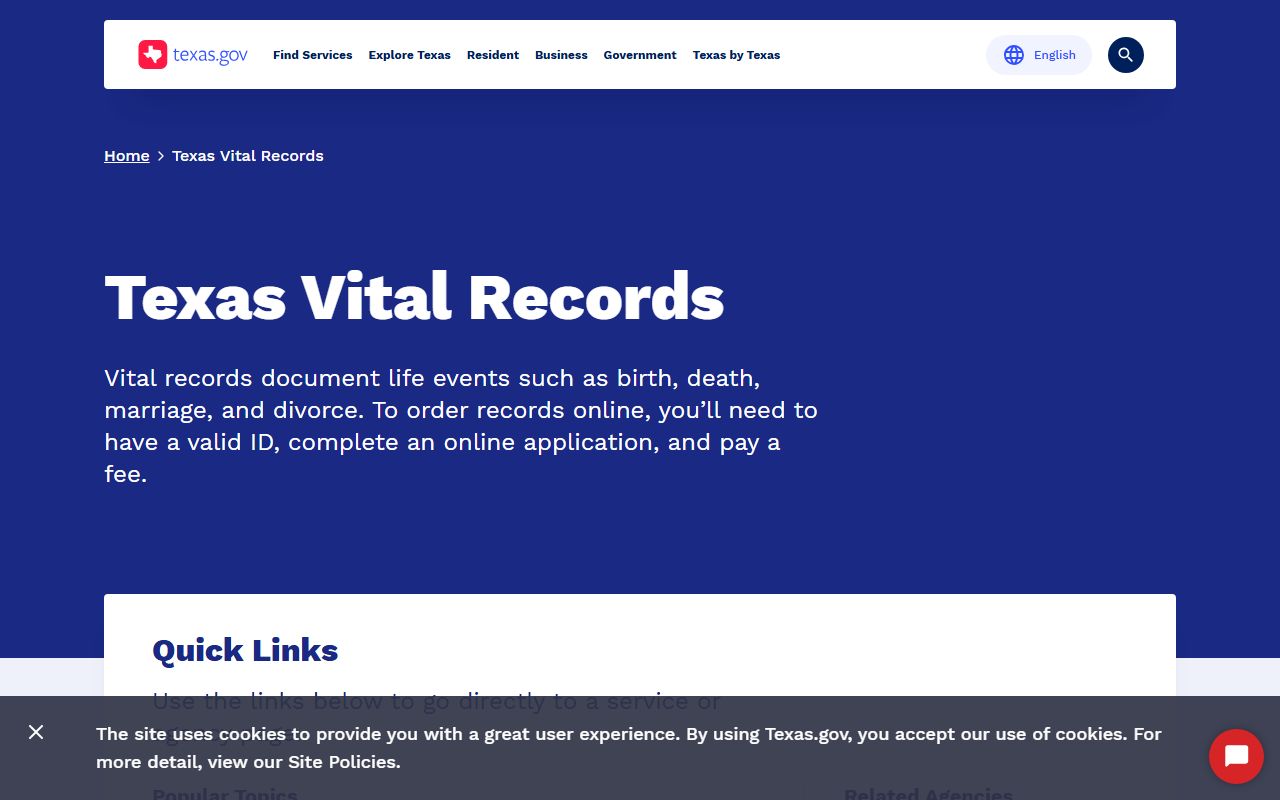
Online orders allow you to pay by card and track your order status at dshs.texas.gov/orderstatus/.
The DSHS requires valid identification for all requests. Acceptable ID includes a current driver's license, state ID, U.S. passport, or military ID. The full list is on the DSHS website. Applications sent without a valid ID will not be processed and will be returned. Below is a screenshot of the DSHS acceptable ID page.
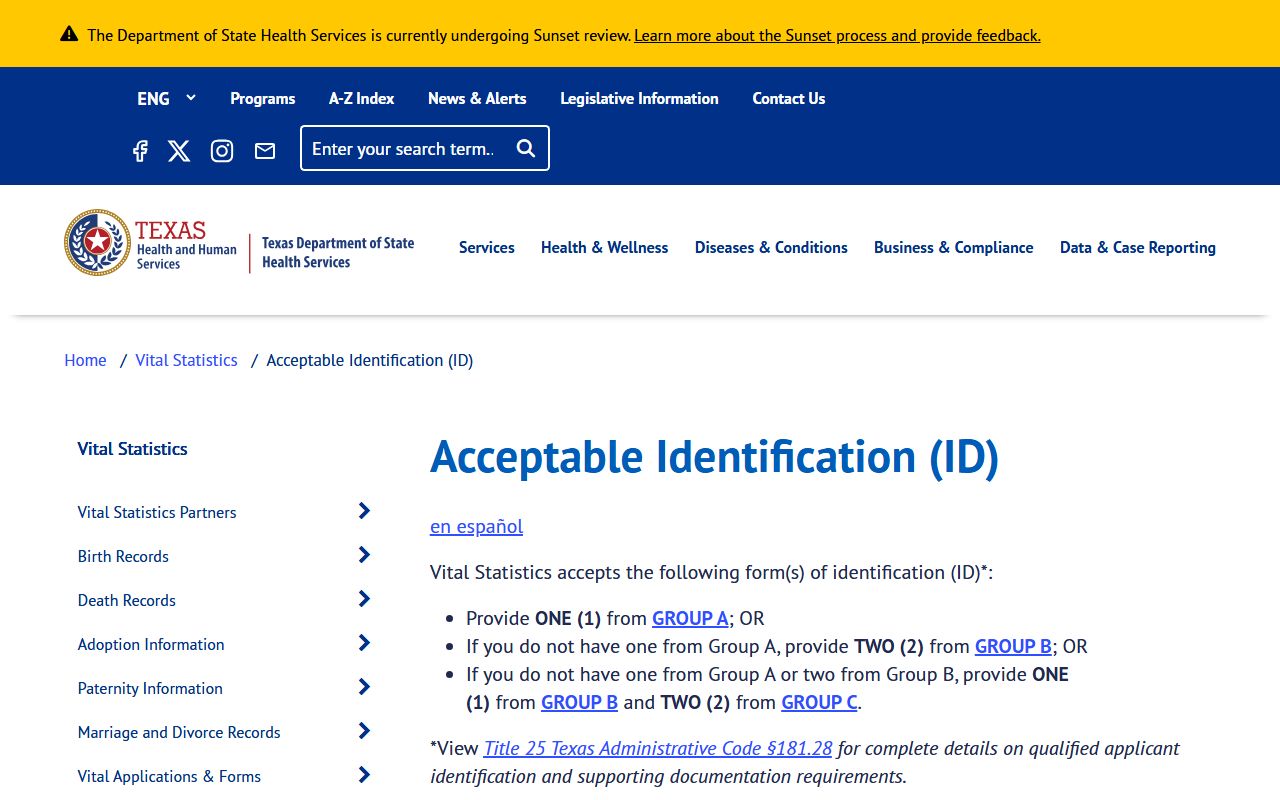
If you are requesting a record on behalf of someone else, you must provide documentation that shows your legal authority to act for them.
Note: Check your order status at dshs.texas.gov or call 888-963-7111. Processing times change based on the volume of requests the state office receives at any given time.
Types of Texas Birth Certificates
Texas issues four types of birth records. The long form birth certificate is a full certified copy of the original document. It shows the complete birth information and any history of corrections made to the record. Long form certificates are required for U.S. passport applications, driver's license applications in most states, and dual citizenship requests. The short form birth certificate is a certified abstract showing only the current information: name, date of birth, place of birth, sex, and parent names. It does not show a history of corrections. Short form certificates work for school enrollment, insurance, and most state and federal agency purposes. Both forms carry the same legal validity for most needs.
Below is a screenshot of the Texas Health and Safety Code Chapter 192, which governs how birth records are created, maintained, and issued in Texas.
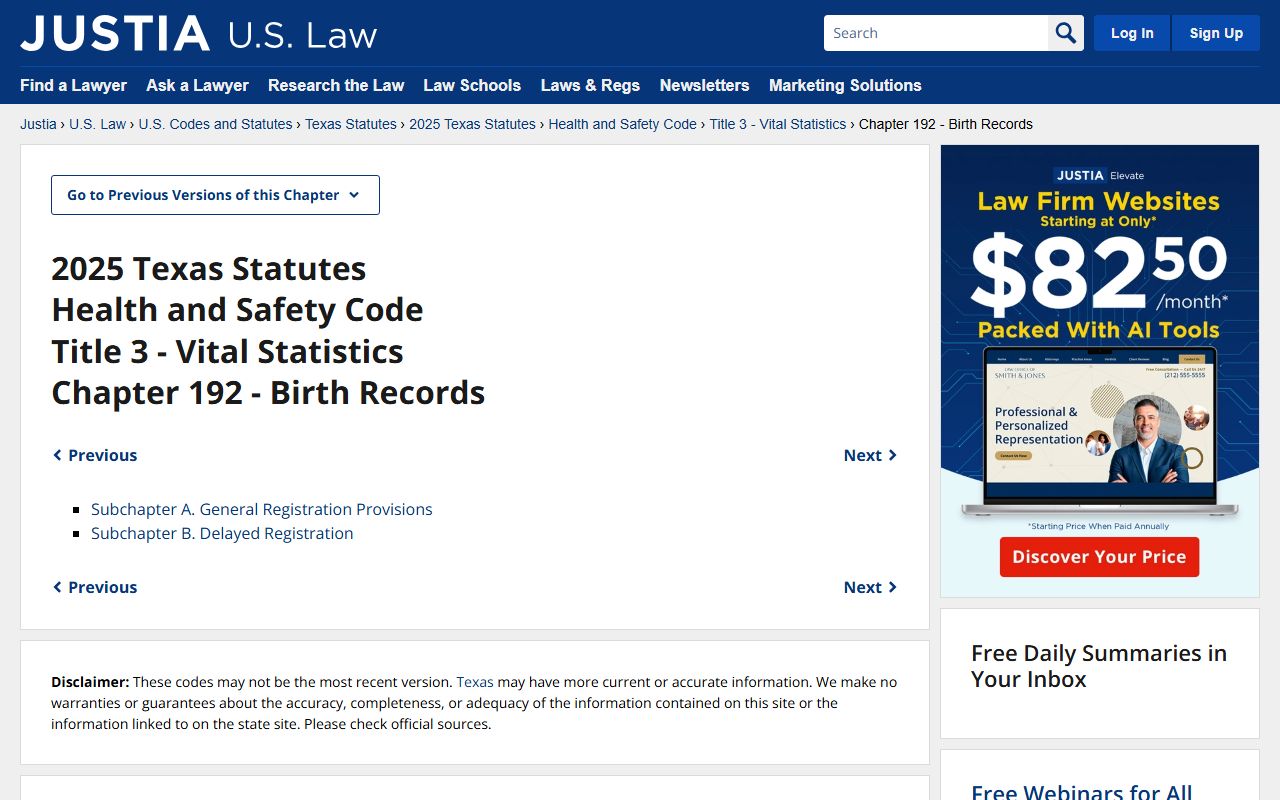
Chapter 192 also covers what information must appear on the birth certificate and which officials are responsible for filing it.
Texas also offers two additional record types. The heirloom birth certificate is a decorative abstract with a Texas-themed design and gold seal. It is similar in content to the short form but has no legal value and cannot be used to prove identity. It is meant for display or framing only. A birth verification letter confirms that a birth is on file in Texas and includes the name, date of birth, and county. It is not a certified copy and cannot substitute for one. Verification letters are useful if you are not sure a record exists before ordering a full certified copy.
Who Can Access Texas Birth Records
Texas birth records are not open to the public. Under Texas Government Code Section 552.115, a birth record stays confidential for 75 years from the date of birth. Before that mark, only qualified applicants may request a certified copy. Here is a look at the Texas Government Code section that sets out the 75-year rule.
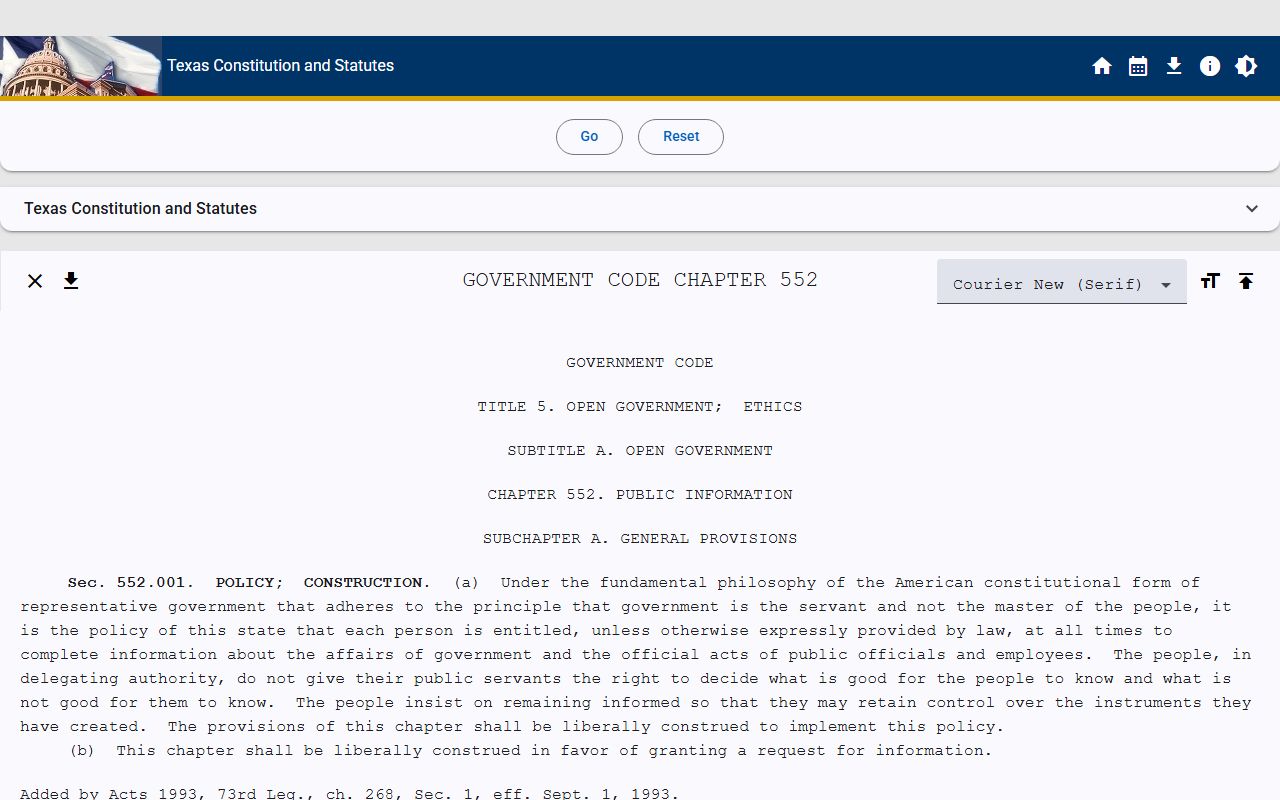
After 75 years, the record automatically becomes public information. No application is required to open it.
The DSHS qualified applicants page lists who may request a birth record under state law. That list includes the person named on the certificate (if at least 18 years old), their parents, siblings, spouse, children, and grandparents. Legal guardians, managing conservators, and legal representatives may also request records if they provide supporting documentation. Anyone asking for a record on behalf of someone else must state their relationship on the application and back it up with proof. Here is the DSHS page on qualified persons.
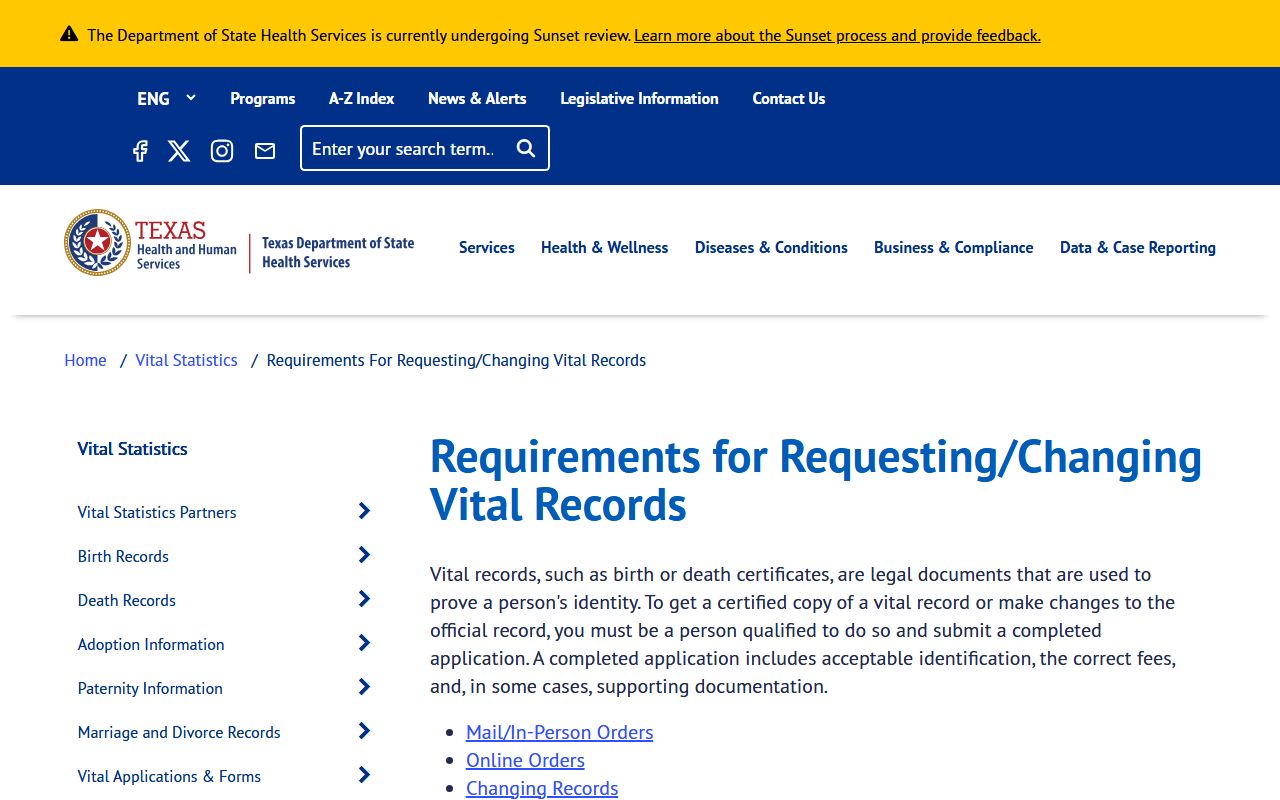
Special rules apply to foster youth and homeless youth. They may obtain a certified copy of their birth record free of charge by visiting any county clerk's office or the state registrar.
Birth Certificate Fees and Processing Times
The fee for a certified copy of a Texas birth certificate is $22 per copy. Additional copies ordered at the same time cost $22 each. That fee is the same across all ordering methods and all county clerk offices. Amending a birth certificate carries a separate fee. Correcting a child's information costs $15. Correcting parent information costs $15 as well. A new certificate issued because of a sex or race designation change costs $25. Military personnel with current deployment orders may qualify for a fee waiver under Texas Government Code Section 437.217.
How long it takes to get a birth certificate depends on how you order. Walk-in service at the DSHS office in Austin is same-day. Online orders and expedited mail orders take 20 to 25 business days from the date the office receives the request. Standard mail orders take 6 to 8 weeks. Expedited mail orders must be sent via overnight service (FedEx, LoneStar, or UPS) to DSHS-VSS, MC 2096, 1100 West 49th Street, Austin, TX 78756.
Correcting a Texas Birth Certificate
Errors on a Texas birth certificate can be fixed using Form VS-170, the Application to Amend Certificate of Birth. The person named on the certificate may apply if they are at least 18 years old. A parent may apply for a minor's certificate. Legal guardians and managing conservators may also apply with proper documentation. This form cannot be used to correct a record based on an adoption. Below is a screenshot of the DSHS amendment page.
The DSHS amendment page also lists the fee schedule for different types of corrections and the documents required for each.
To submit a correction, complete Sections 1, 2, 5, and 6 of the form and sign before a notary public. Attach a copy of your valid photo ID and any supporting documents that prove the correct information. The type of correction determines what documents you need. Common supporting documents include hospital records, school records, and affidavits from parents or witnesses. Send the completed package to DSHS Vital Statistics Section, P.O. Box 12040, Austin, TX 78711-2040.
Delayed Birth Registration in Texas
Not every birth in Texas was registered right away. People born at home before statewide registration began in 1903, or those whose births were never filed, may need to apply for a delayed birth certificate. Texas allows delayed registration under 25 Texas Administrative Code Section 181.60. A delayed certificate can only be filed if the evidentiary requirements set by the Vital Statistics Unit are met. The certificate will be marked "Delayed" and show the date it was registered. Probate records and delayed records may not be abstracted. Here is a screenshot of the relevant Texas Administrative Code section.
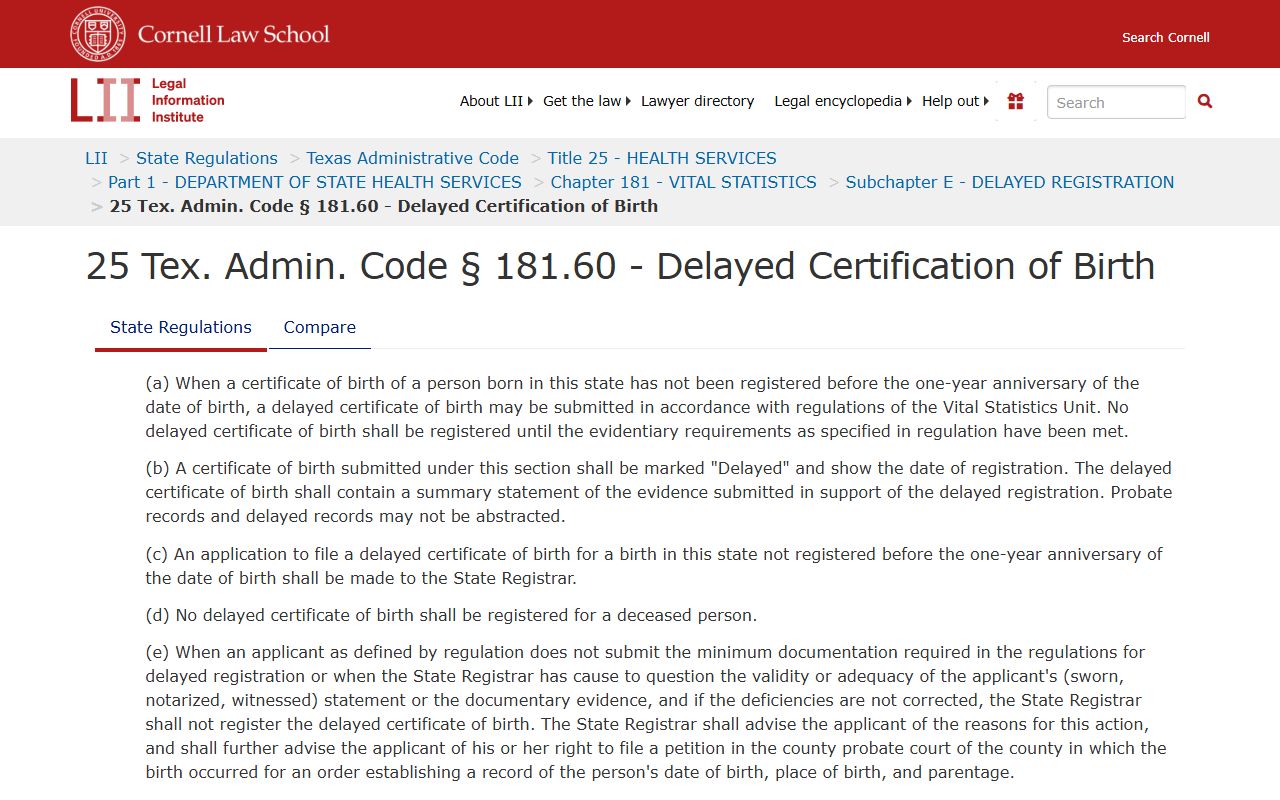
This code section also explains when the State Registrar can refuse to register a delayed certificate and how applicants can appeal through the county probate court.
To apply for a delayed birth registration, submit an application to the State Registrar with documents that prove the date and place of birth. Acceptable supporting documents can include early school records, baptismal certificates, census records, or affidavits from relatives. If the documentation is not enough, you may need to petition the probate court in the county where the birth occurred. No delayed certificate can be registered for a deceased person.
Note: Delayed birth registrations from 1939 to 1975 were mostly issued to people born before 1903 who needed a birth certificate to access Social Security or other government benefits.
Texas Birth Records for Genealogy
Texas birth records are a strong source for family research. Statewide registration started in 1903, but some Texas counties maintained their own records as early as 1873. County recorders registered births from 1873 to 1876. The system lapsed, then county clerks took over again in 1903 when the state program was created. The Library of Congress guide to Texas local history and vital records is a good starting point for finding older county-level records. It explains which county offices hold historical collections and how to access them. Below is a screenshot of that guide.
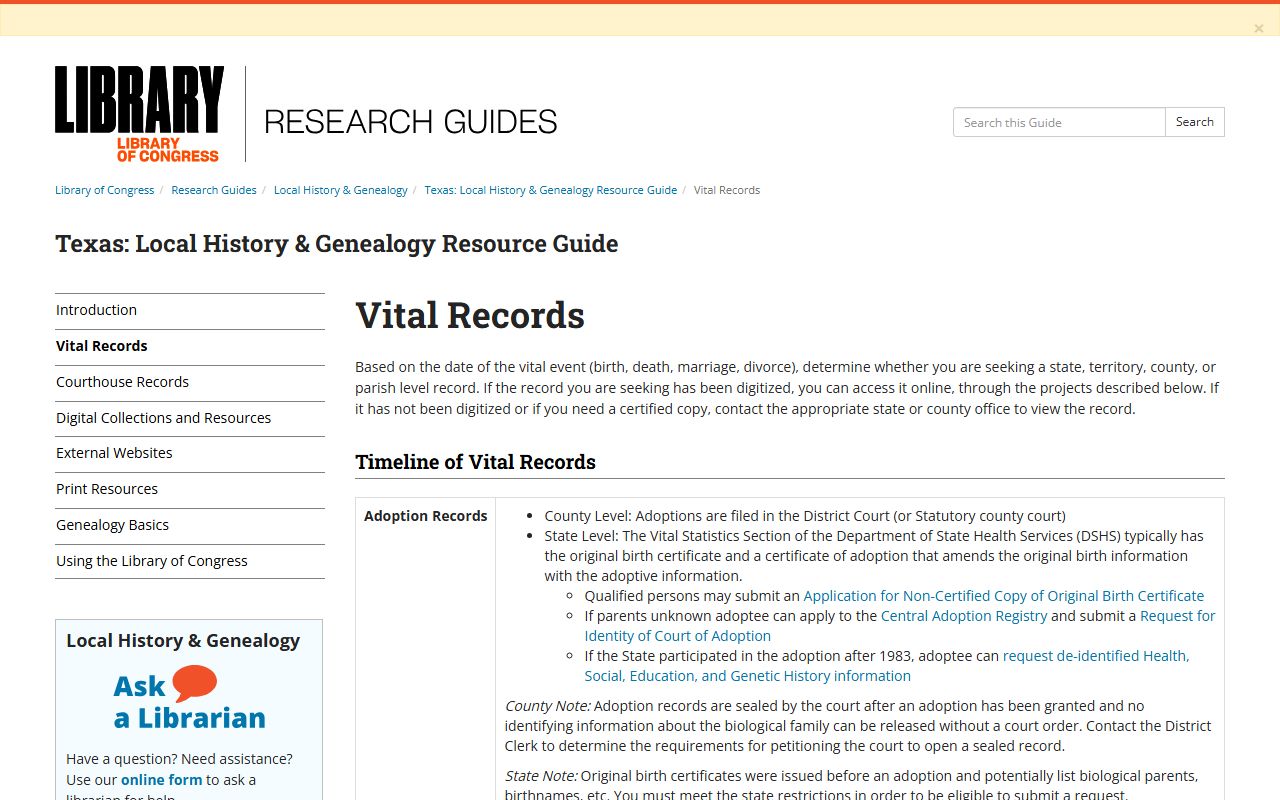
The guide covers state-level records, county-level records, city records, and various repositories across Texas that hold historical vital records collections.
The Texas Birth Index organizes records by year and alphabetically by last name. Each entry shows the registrant's name, date of birth, county, local or state file number, father's name, and mother's maiden name. Digital birth indexes going back to 1926 can be ordered from the DSHS Vital Statistics Unit. Microfiche indexes from 1903 to 1924 are also available. Birth records become public information 75 years after the date of birth, so records from 1950 and earlier are now accessible to the general public.
Browse Texas Birth Records by County
Each of Texas's 254 counties has its own County Clerk that files and maintains birth records for events occurring in that county. Pick a county below to find contact info, addresses, and local resources for birth records in that area.
Birth Records in Major Texas Cities
Residents of major Texas cities can request birth certificates through their county clerk or through city health departments in Houston, San Antonio, Austin, and Corpus Christi. Pick a city below for birth records resources in that area.